Bidar travel guide
Bahmani and Barid Shahi capital on the Deccan plateau: a red laterite fort, domed royal tombs, the Mahmud Gawan Madrasa and Nanak Jhira gurdwara.
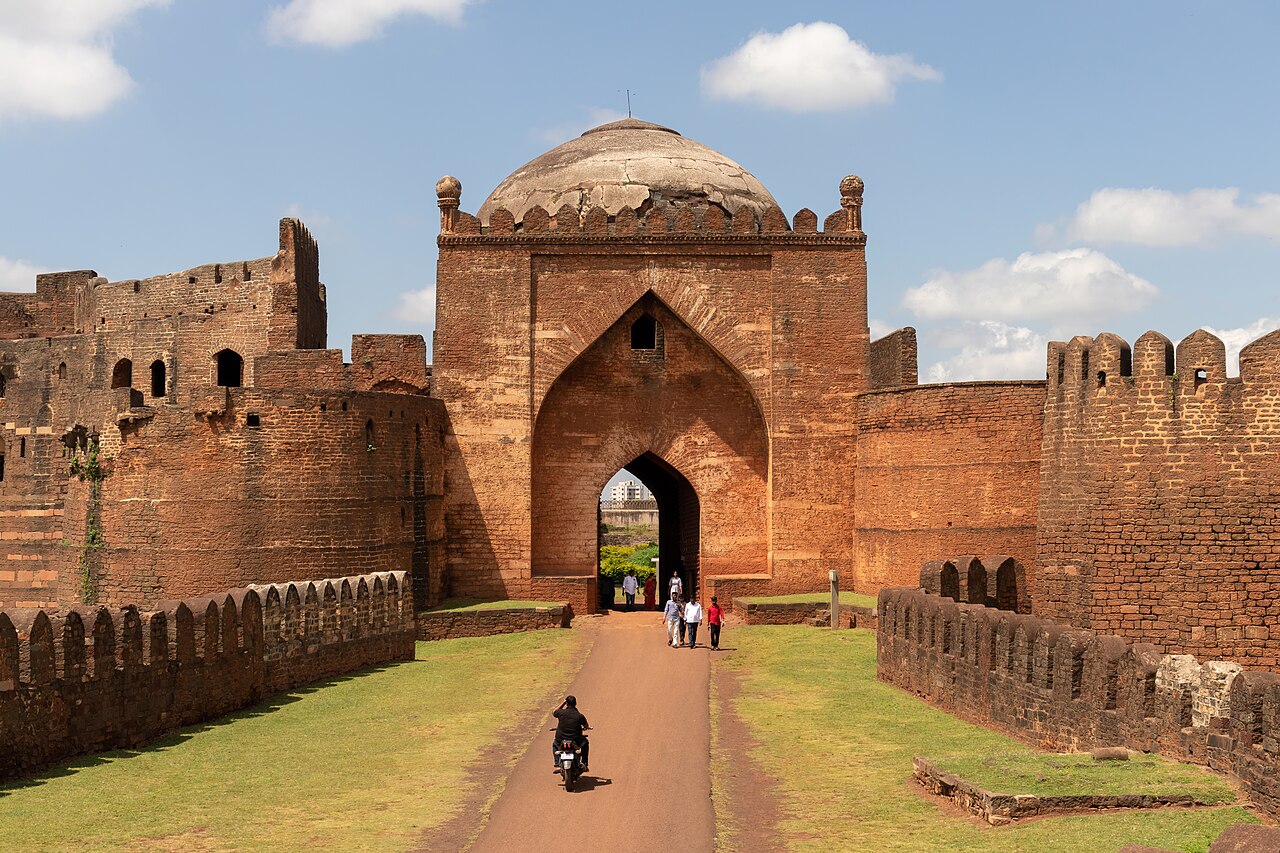
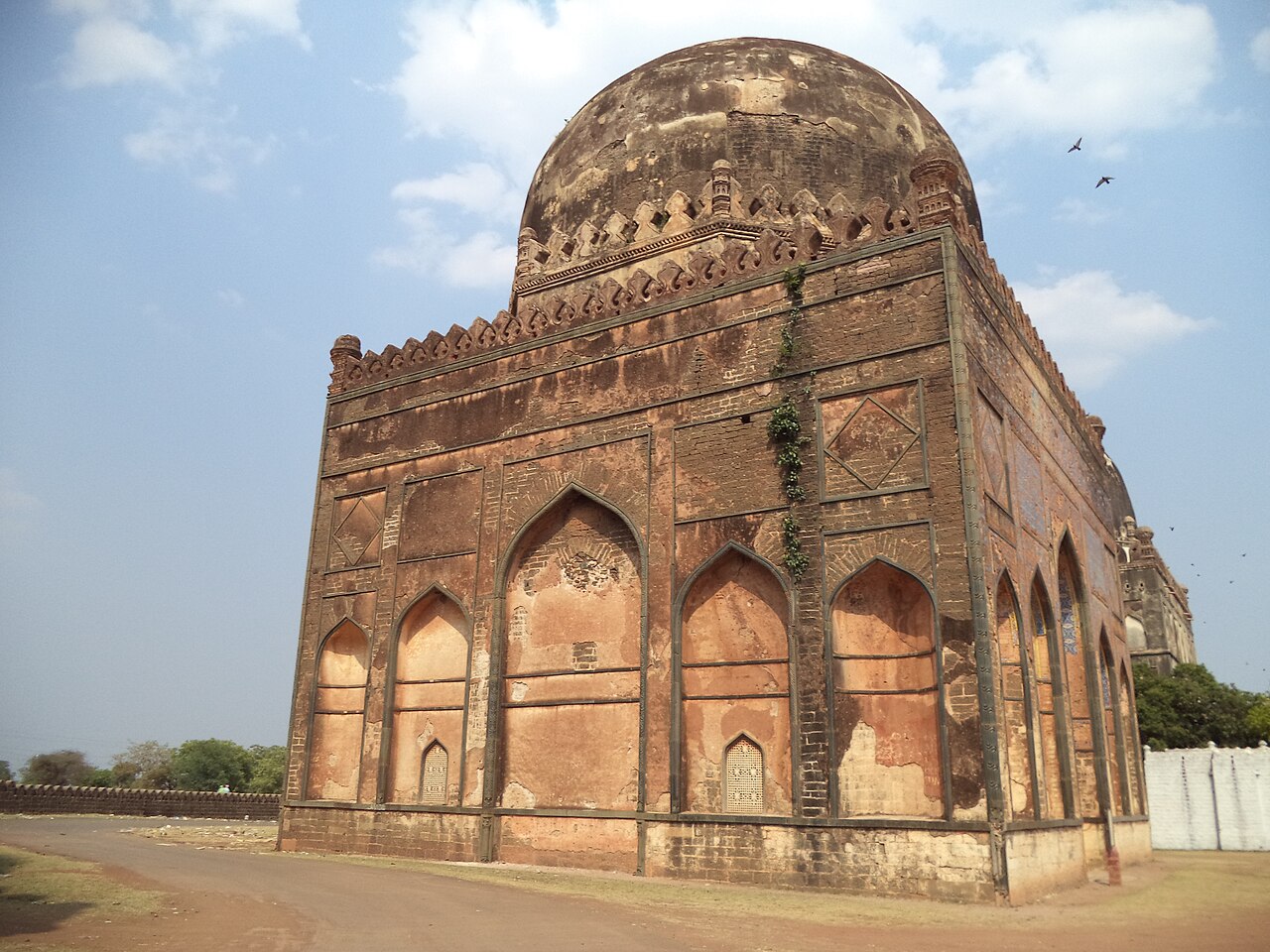
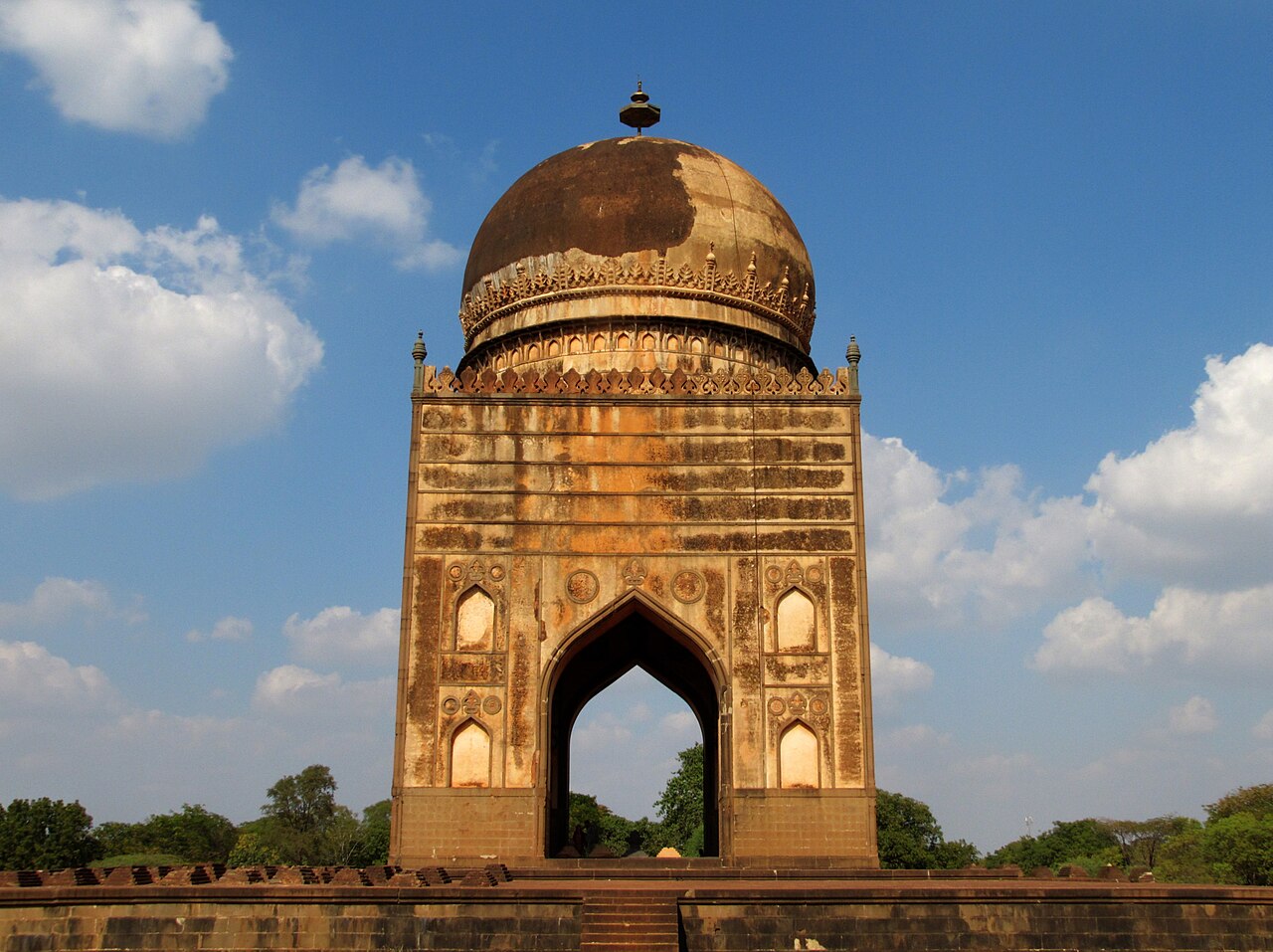
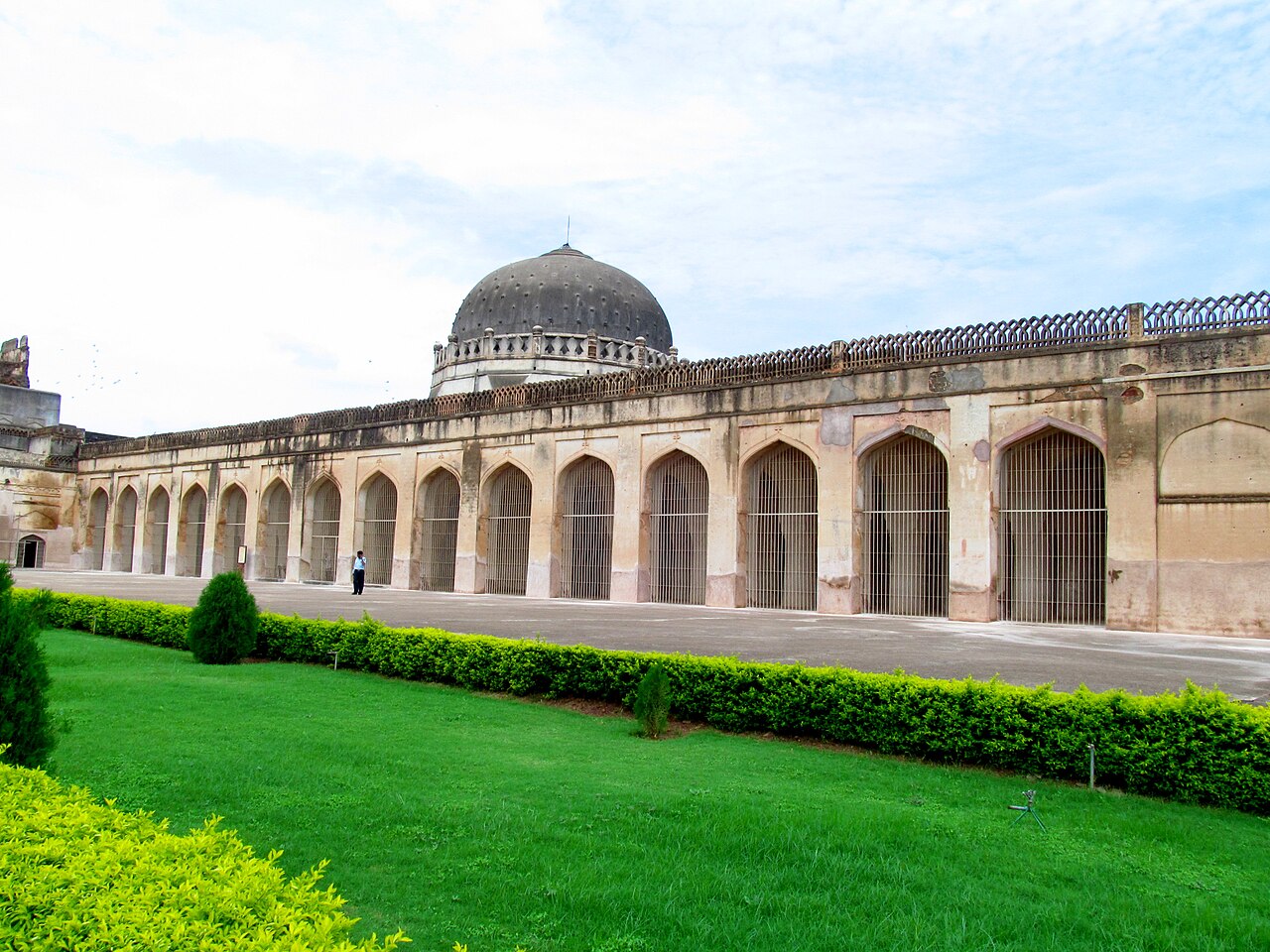
Bidar, headquarters of Karnataka's northernmost district, sits on a laterite plateau 700 m up, 130 km from Hyderabad. Ahmad Shah I moved the Bahmani capital here from Gulbarga in 1427 and rebuilt the fort; after the sultanate broke up, the Barid Shahis ruled from Bidar until Bijapur took it in 1619, and Aurangzeb captured it for the Mughals in 1656-57 before it passed to the Nizams. Called the City of Whispering Monuments, it has nearly 100 historic buildings. The fort, with its triple moat, holds the Rangin Mahal, the Solah Khamba mosque, the Takht Mahal and a museum; in the walled town are the Mahmud Gawan Madrasa (1472) and the Chaubara watchtower, and outside are the domed Bahmani tombs at Ashtur and the Barid Shahi tombs. The fort, madrasa and Barid Shahi tombs are on UNESCO's tentative list. Bidar is also a Sikh pilgrimage centre for Gurdwara Nanak Jhira Sahib, and the Narasimha Jharni cave temple is reached by wading along a flooded tunnel. The city gives its name to Bidriware, blackened metal inlaid with silver, which has a GI tag. It is north Karnataka's coolest city: October to February is best; May reaches 39 C. Trains run to Hyderabad, Bengaluru and Mumbai.
Plan your Bidar trip
Open Guide My Holiday to turn these places into a routed, day-by-day itinerary and book a cab that follows it.